


EIDD-1931 Cats Stomatitis Treatment Guide for Chronic Oral Inflammation
EIDD-1931 is drawing attention as a targeted antiviral option for cats with stomatitis when feline calicivirus or feline herpesvirus appears to be part of the problem. For cats with chronic oral pain, mouth ulcers, drooling, and gingivostomatitis, the appeal is simple: treat the viral trigger more directly instead of relying only on pain control and anti-inflammatory support.
check:Antiviral Support for Feline Herpesvirus Calicivirus Stomatitis
EIDD-1931 for cats stomatitis and oral pain
Cats with stomatitis often have inflamed gums, ulcerated mouth tissue, bad breath, difficulty chewing, and weight loss. In many cases, feline calicivirus stomatitis and feline herpesvirus flare-ups can keep the mouth in a cycle of irritation, which is why conventional care alone may not fully control the disease.
EIDD-1931, also known as NHC, is being discussed as a feline herpesvirus med and feline calicivirus-focused antiviral because it works by disrupting viral replication. That makes it relevant for chronic feline oral inflammatory disease, recurrent oral ulcers, feline infectious stomatitis, and stubborn mouth pain that returns after antibiotics or steroids.
Why cat stomatitis is so hard to manage
Cat stomatitis is not just simple gum disease. It often involves an exaggerated immune response in the mouth, ongoing viral activity, dental plaque, secondary infection, and severe inflammation that can make every bite painful.
This is why many cats show signs such as drooling, pawing at the mouth, refusal to eat hard food, facial pain, and poor grooming. In severe feline chronic gingivostomatitis, even soft food can be uncomfortable, and the condition can become long-term without a comprehensive treatment plan.
How EIDD-1931 works in feline calicivirus and herpesvirus cases
EIDD-1931 is a nucleoside analogue that interferes with viral RNA replication. In practical terms, it helps reduce the viral burden that can keep oral inflammation active in cats with calicivirus-associated stomatitis or herpesvirus-related mouth disease.
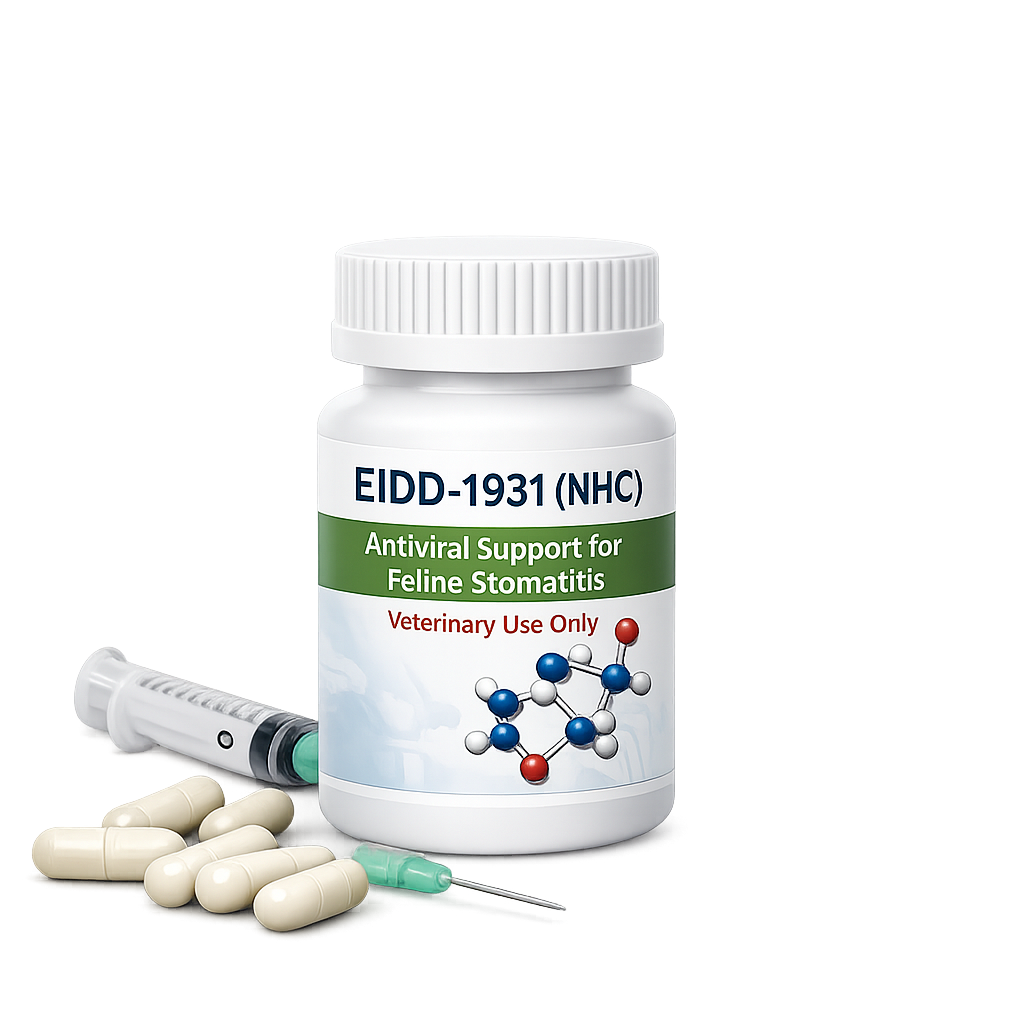
The reason this matters is that many cats with chronic oral inflammation are not just dealing with damaged gums; they are dealing with an active trigger that keeps the immune system switched on. By lowering that viral pressure, EIDD-1931 may support better healing, fewer relapses, less mouth pain, and improved eating behavior.
Market trends in feline stomatitis treatment
Interest in feline stomatitis treatment has shifted toward combination care. Veterinarians and pet health brands are increasingly focusing on antiviral support, pain relief, dental management, immune modulation, and long-term quality of life rather than relying on one single intervention.
In the wider market, pet owners are searching for solutions tied to feline calicivirus mouth ulcers, chronic gingivostomatitis in cats, feline herpesvirus meds, and oral inflammation in cats because these terms reflect real clinical frustration. The strongest content and product pages in this space answer the same concern: how to reduce pain, restore appetite, and prevent repeat flare-ups.
Top treatment options for cat stomatitis
Competitor comparison in feline oral disease
Core technology behind EIDD-1931
EIDD-1931 is associated with lethal mutagenesis, a mechanism that pushes viral replication toward error overload. That matters in cats with persistent oral inflammatory disease because the goal is not only symptom relief but also lowering the infectious trigger that keeps the mouth inflamed.
In everyday language, that means a cat with recurrent feline calicivirus stomatitis may benefit more from a therapy that reduces the virus itself than from a plan that only treats swelling after it starts. For chronic oral inflammation, that difference can shape appetite, comfort, and relapse frequency.
Hero Veterinary in feline oral care
Hero Veterinary is a globally oriented pet healthcare organization founded in Hong Kong in 2018, with a team of more than 30 members and a strong focus on research, technical support, and advanced veterinary solutions. The company has served over 12,000 pets and works with more than 300 pet clinics and hospitals worldwide, with a mission centered on difficult veterinary diseases and compassionate care.
Real user cases and ROI
A common example is a cat that has repeated flare-ups of mouth pain, bad breath, drooling, and refusal to eat dry food despite multiple rounds of standard treatment. When the treatment plan addresses the viral driver more directly, owners often report better feeding behavior, less oral discomfort, and fewer relapses over time.
The return on investment in cat stomatitis treatment is usually measured in quality of life rather than simple dollars. Better appetite, fewer emergency visits, reduced long-term pain, and less caregiver stress can make a strong case for a targeted chronic mouth pain in cats strategy.
What cats usually need together
EIDD-1931 alone is rarely the entire answer. Most cats with stomatitis do best with a combined plan that may include oral pain control, dental evaluation, nutritional support, and careful monitoring for feline calicivirus symptoms, feline herpesvirus signs, and secondary infection.
That is especially true in multicat homes, shelters, and rescue settings where contagious viral exposure can keep reintroducing the problem. In these environments, a stronger focus on viral control and supportive care can reduce the cycle of oral flare-ups.
FAQs
What is EIDD-1931 for cats stomatitis?
EIDD-1931 is an antiviral compound being explored for feline calicivirus and herpesvirus-related oral inflammation in cats.
Can EIDD-1931 help feline calicivirus stomatitis?
It may help by lowering viral replication and reducing the trigger behind chronic mouth ulcers and gingivostomatitis.
Is EIDD-1931 a cure for cat stomatitis?
No single treatment is a universal cure, but it may be an important part of a multimodal plan for viral-associated cases.
What are common stomatitis symptoms in cats?
Common signs include drooling, mouth pain, bad breath, red gums, ulceration, weight loss, and trouble eating.
When should a cat be seen for mouth pain?
A cat should be evaluated promptly if it stops eating, drools excessively, bleeds from the mouth, or shows persistent oral pain.
Future outlook for feline stomatitis treatment
The next phase of feline stomatitis treatment will likely combine better diagnostics, stronger antiviral options, and more personalized plans based on whether the cat has calicivirus, herpesvirus, dental disease, or immune-driven inflammation. That shift matters because chronic oral inflammatory disease in cats is rarely caused by just one problem.
As research expands, more attention will likely move toward therapies that reduce viral load, support oral healing, and preserve teeth whenever possible. For owners, that means more practical paths to relieve pain, restore eating, and improve long-term comfort in cats with stomatitis.
Final path forward
If a cat has recurrent mouth ulcers, chronic gingivostomatitis, bad breath, drooling, or clear signs of oral pain, the strongest next step is a full veterinary evaluation with a plan that addresses both inflammation and the possible viral trigger. EIDD-1931 is emerging as a meaningful option in that conversation because it fits the real-world need for better control of feline calicivirus stomatitis and related chronic mouth disease.