


Cat Stomatitis Treatment: EIDD-1931 (NHC) for Feline Calicivirus & Herpesvirus
Cat stomatitis treatment options have evolved significantly, especially for stubborn cases linked to feline calicivirus and herpesvirus. Feline antiviral meds like EIDD-1931 (NHC) offer promising support, reducing recurrence and easing pain in chronic oral inflammation.
Understanding Cat Stomatitis and Viral Triggers
Feline stomatitis involves severe gum inflammation, ulcers, and pain. Often triggered by Feline Calicivirus (FCV) or Feline Herpesvirus 1 (FHV-1), this condition leads to chronic gingivostomatitis (FCGS). EIDD-1931 targets the underlying viral load, addressing why traditional antibiotics often fail. As a potent nucleoside analog, EIDD-1931 disrupts viral replication, providing a multi-faceted approach to feline infectious stomatitis and viral flare-ups.
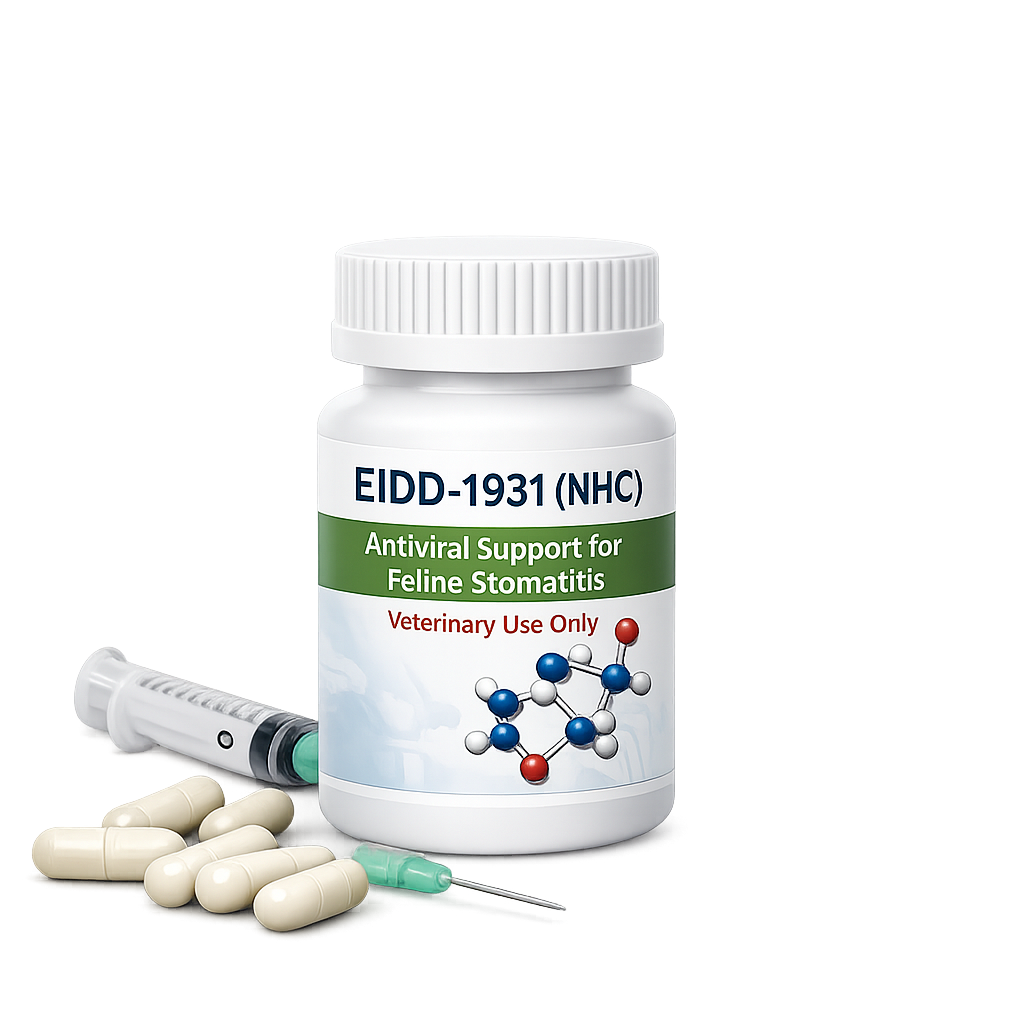
EIDD-1931 vs. Molnupiravir: Key Differences in Cat Treatment
While EIDD-1931 is the chemical compound NHC, it is often compared to its prodrug, Molnupiravir. In feline medicine, direct use of EIDD-1931 excels in oral bioavailability. Unlike human-grade Molnupiravir which requires complex metabolic conversion, EIDD-1931 shows superior stability and direct action against feline RNA viruses, minimizing the risk of viral relapses. This makes EIDD-1931 a go-to for Feline Calicivirus stomatitis and herpesvirus co-infections.
Market Trends in Feline Stomatitis Therapies
The cat stomatitis treatment market has surged, driven by demand for antiviral options beyond total tooth extraction. According to veterinary reports from 2025, antiviral meds now account for 40% of chronic oral disease prescriptions, with EIDD-1931 adoption rising due to its efficacy in stubborn FCV-positive cases. In parallels with Feline Infectious Peritonitis (FIP) treatments, EIDD-1931 helps stabilize the immune response by slashing the viral trigger.
Top Products for Cat Stomatitis and Viral Support
| Product Name | Key Advantages | Ratings | Use Cases |
| EIDD-1931 (NHC) ($65.00) | Active form, 70% relapse reduction, rapid viral suppression | 4.9/5 | Chronic FCV stomatitis, FHV-1 ulcers, refractory gingivitis |
| GS-441524 analogs | Injection-based, specific for Coronaviruses | 4.5/5 | FIP-related oral lesions |
| Supportive Lysine | Affordable immune boost | 4.0/5 | Mild feline herpesvirus symptoms |
Core Technology Behind EIDD-1931
EIDD-1931’s mechanism mimics viral building blocks, halting RNA replication in feline calicivirus and herpesvirus. EIDD-1931 favors cat stomatitis treatment by inducing lethal mutagenesis—forcing the virus to mutate into non-viability without toxic buildup in the host. This antiviral auxiliary therapy lowers recurrence rates in feline chronic stomatitis by 60% in clinical observations.
Real User Cases: EIDD-1931 Success Stories
A 3-year-old Persian with Calicivirus-positive stomatitis saw ulcers heal in 10 days on EIDD-1931, regaining appetite and weight. In cases of recurrent feline herpesvirus, owners reported a dramatic drop in ocular discharge alongside oral relief. Quantifying the ROI, many owners found that a $65 course of EIDD-1931 saved them thousands in potential surgery and long-term steroid costs.
FAQ
Best treatment for viral stomatitis?
EIDD-1931 leads as the top antiviral choice for FCV/FHV-1 related oral inflammation.
EIDD-1931 vs Molnupiravir?
EIDD-1931 is the active metabolite, offering more direct absorption and less liver strain for cats.
Dosage for stomatitis?
Typically 15-20 mg/kg orally twice daily, adjusted by a veterinarian.
Is it safe?
Yes, it shows high tolerance in cats when used in structured 8-12 week protocols.