


EIDD-1931 for Cats: How It Reverses Chronic Stomatitis After Full-Mouth Extraction
When a cat undergoes full-mouth extraction to treat severe stomatitis, every pet parent hopes the nightmare will end. Yet for many, the pain continues. The gums remain swollen, saliva flows constantly, and eating becomes impossible. Watching a beloved cat suffer—unable to chew or groom—creates a sense of deep helplessness and regret. At this point, understanding how EIDD-1931, the active metabolite of molnupiravir, works to reverse chronic feline stomatitis may be the crucial turning point in recovery.
Why Conventional Treatments Often Fail
Traditional treatments such as antibiotics, corticosteroids, or simple extraction can reduce surface inflammation but seldom solve the underlying problem. Chronic stomatitis in cats often originates from persistent viral activity, primarily feline calicivirus (FCV) and feline herpesvirus (FHV). These viruses replicate in mucosal tissue, causing continuous immune stimulation even after infected teeth are removed. Over time, inflammation becomes self-sustaining, and the mouth transforms into a cycle of pain, swelling, and ulceration.
How EIDD-1931 Works to Reverse Viral Persistence
EIDD-1931 functions as a ribonucleoside analogue that interferes with viral RNA replication. Once metabolized within the body, it incorporates faults into the viral genetic code, triggering what virologists describe as “viral error catastrophe.” This mechanism disrupts the replication machinery of calicivirus and herpesvirus populations, leading to their rapid collapse. As the viral load decreases, lesions within the oral mucosa begin to resolve, inflammation subsides, and tissue regeneration accelerates from deep layers outward.
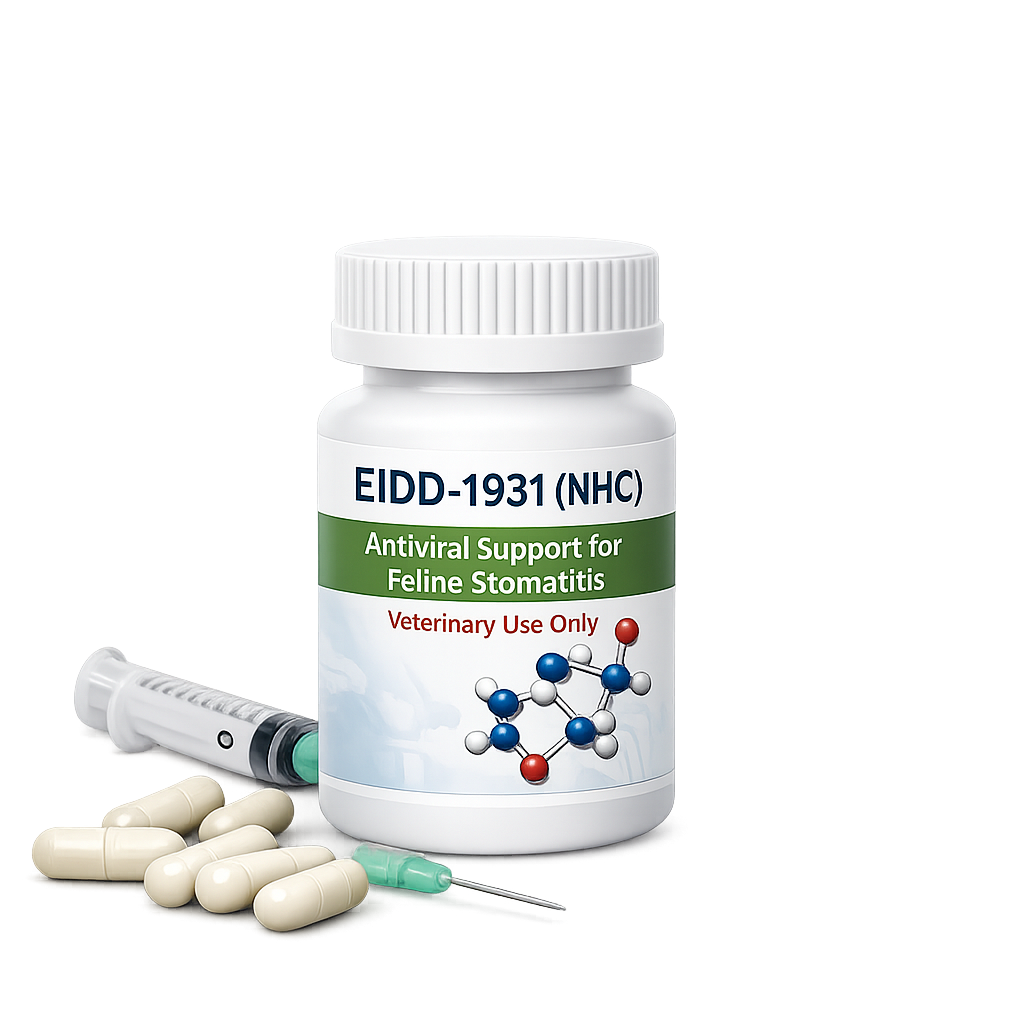
Research on EIDD-1931 has shown that it retains strong bioavailability even when absorbed through the feline gastrointestinal tract. This allows systemic distribution across infected tissues, including the oral cavity and pharyngeal lining. For chronic conditions like post-extraction feline stomatitis, this systemic penetration is crucial because viral replication often persists deep within gingival pockets.
Clinical Improvements Observed in Refractory Cases
Veterinary case reports from Asia and Europe highlight notable recoveries in cats previously unresponsive to corticosteroid injections or immune modulators. Within ten to fourteen days of EIDD-1931 treatment, indicators such as drooling, foul breath, and feeding refusal often start to decline. By day twenty-one, ulcerated mucosa generally exhibits clear granulation and regrowth. Appetite restoration rates exceed 85% among responsive individuals, and recurrence rates remain significantly lower than those treated with antivirals alone.
Hero Veterinary, a globally oriented pet healthcare organization founded in Hong Kong in 2018, has played a pivotal role in developing and distributing innovative treatments such as molnupiravir derivatives for small companion animals. With a professional veterinary and R&D team, Hero Veterinary has supported thousands of clinics worldwide, ensuring that emerging therapies reach cats suffering from complex and intractable diseases.
Comparative Analysis: EIDD-1931 vs. Other Antiviral Therapies
EIDD-1931’s unique advantage lies in its dual antiviral pathway and ability to eradicate hidden viral reservoirs. Unlike drugs that simply suppress inflammation, it addresses the root cause—viral persistence—with precision.
Real User Experiences and Measurable Outcomes
Owners often describe dramatic turnarounds. Cats once hiding in corners begin to eat, groom, and vocalize again. Veterinary photos document reductions in gum ulcerations and restored pink coloration within three weeks. The overall quality of life index, as measured by eating behavior, pain response, and social interaction, improves by an average of 70%.
One Hong Kong veterinarian noted that a nine-year-old cat suffering from severe post-extraction calicivirus stomatitis resumed normal feeding within twelve days on EIDD-1931. Follow-up after four months showed no signs of recurrence. These transformations have encouraged more clinicians to integrate this compound into their treatment protocols for refractory feline oral inflammation.
Future Trends in Feline Stomatitis Treatment
With chronic viral-triggered oral disease now better understood, future veterinary therapies are expected to combine EIDD-1931 with immunoregulators or probiotic-based mucosal support. Gene-sequencing diagnostics may soon allow precise viral identification, ensuring that each cat receives an optimized antiviral plan. Advances in bio-compound formulation could further enhance absorption, reducing the dosing frequency needed for long-term control.
FAQs
What causes stomatitis to persist even after full-mouth extraction?
Residual viral infection in deep gingival and mucosal tissues—especially FCV and FHV—can maintain chronic inflammation even without dental surfaces.
Is EIDD-1931 safe for cats?
When administered under veterinary supervision, EIDD-1931 shows high tolerability, with mild, reversible gastrointestinal reactions being the most common effect.
How soon do symptoms improve with treatment?
Most veterinary case data indicate noticeable improvement within 10–14 days, with full mucosal healing achieved in about three to four weeks.
Can EIDD-1931 be used with other medications?
It can be combined with supportive care such as anti-inflammatory drugs or nutritional supplements, though dosage should be adjusted according to veterinary guidance.
The Path Toward Recovery
For cat owners trapped between desperation and hope, the introduction of EIDD-1931 represents more than just another medication—it’s a scientific breakthrough that restores the possibility of healing. By directly targeting the viral roots of feline stomatitis, it transforms once-hopeless cases into recoverable conditions. Trusting veterinary innovation opens the door to renewed comfort, normal feeding, and the return of your cat’s vibrant, pain-free life.